
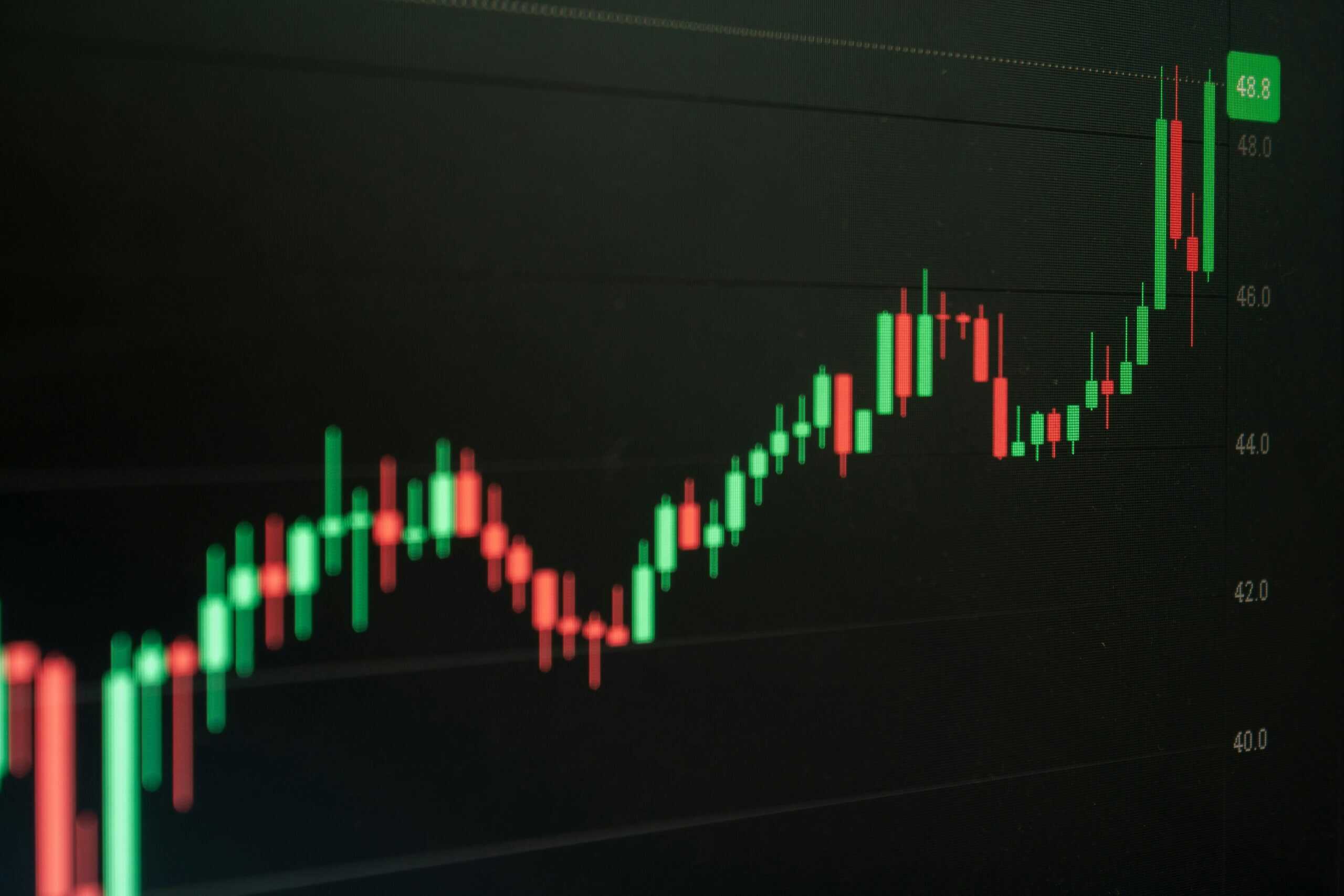
Prices of financial instruments are in constant motion, and every new quote received by the trading platform contributes to the formation of a price chart. There are three primary chart types used to display this movement: line charts, bar charts, and Japanese candlesticks.
It is also important to note that on all CG Invest trading platforms, charts are constructed using bid prices only. The ask price is not reflected in the chart itself and can instead be viewed as a horizontal line displayed alongside the price action.

A line chart is the simplest chart type and is often the easiest for new traders to understand. It displays only the closing price for each selected time period, such as one minute or one hour, with these points connected by a continuous line.
While this provides a clear view of the general price direction, it does not offer enough detail for deeper market analysis. As a result, line charts are mainly used for a basic overview of price movement rather than for professional or technical analysis.
Below is an example of a line chart for EUR/USD.

A bar chart offers a more detailed view of price action compared to simpler chart types. For each selected time period, it displays the opening price, closing price, highest level reached, and lowest level traded.
On most trading platforms, this information is shown as O-H-L-C, which stands for Open, High, Low, and Close bid prices for that specific timeframe.
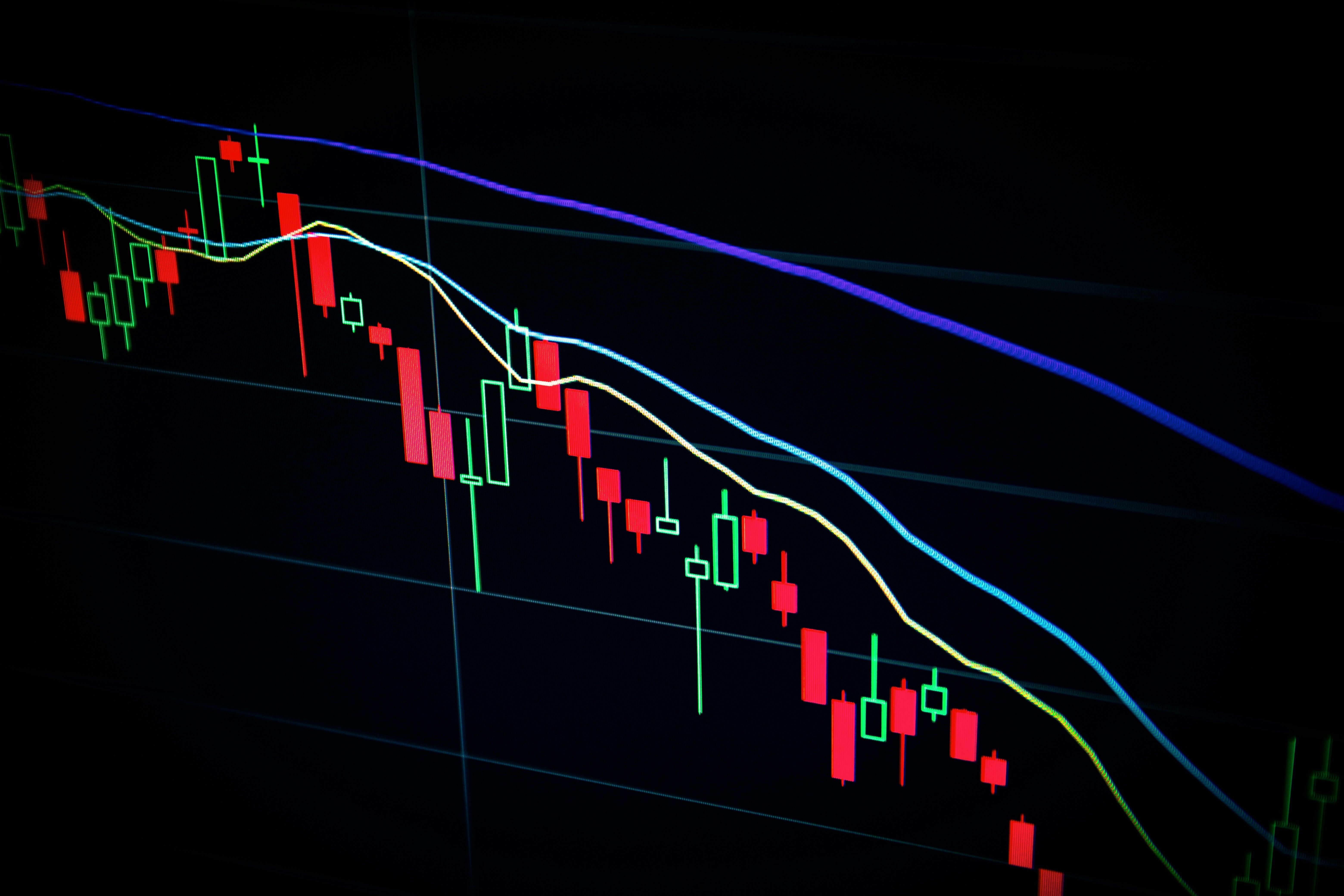
A bar chart is made up of a vertical line with two short horizontal markers extending from it. The marker on the left indicates the opening price for the period, while the marker on the right represents the closing price.
The vertical line illustrates the full price range recorded during the selected timeframe. The bottom shows the lowest price reached, and the top shows the highest price traded.
Although bar charts provide comprehensive price information, they are generally less intuitive to read than candlestick charts.
Japanese candlestick charts originated in Japan during the 19th century, when rice traders developed them to track price movements and profit and loss.
Today, this chart type is widely regarded as the most practical and popular among traders and analysts, as it presents complete price information in a clear visual format.

Each candlestick has a body formed by the opening and closing prices. Wicks show the highest and lowest prices reached during the period.

Line charts show closing prices only, bar charts show full O-H-L-C data, and candlestick charts present the same information in the clearest visual form.