
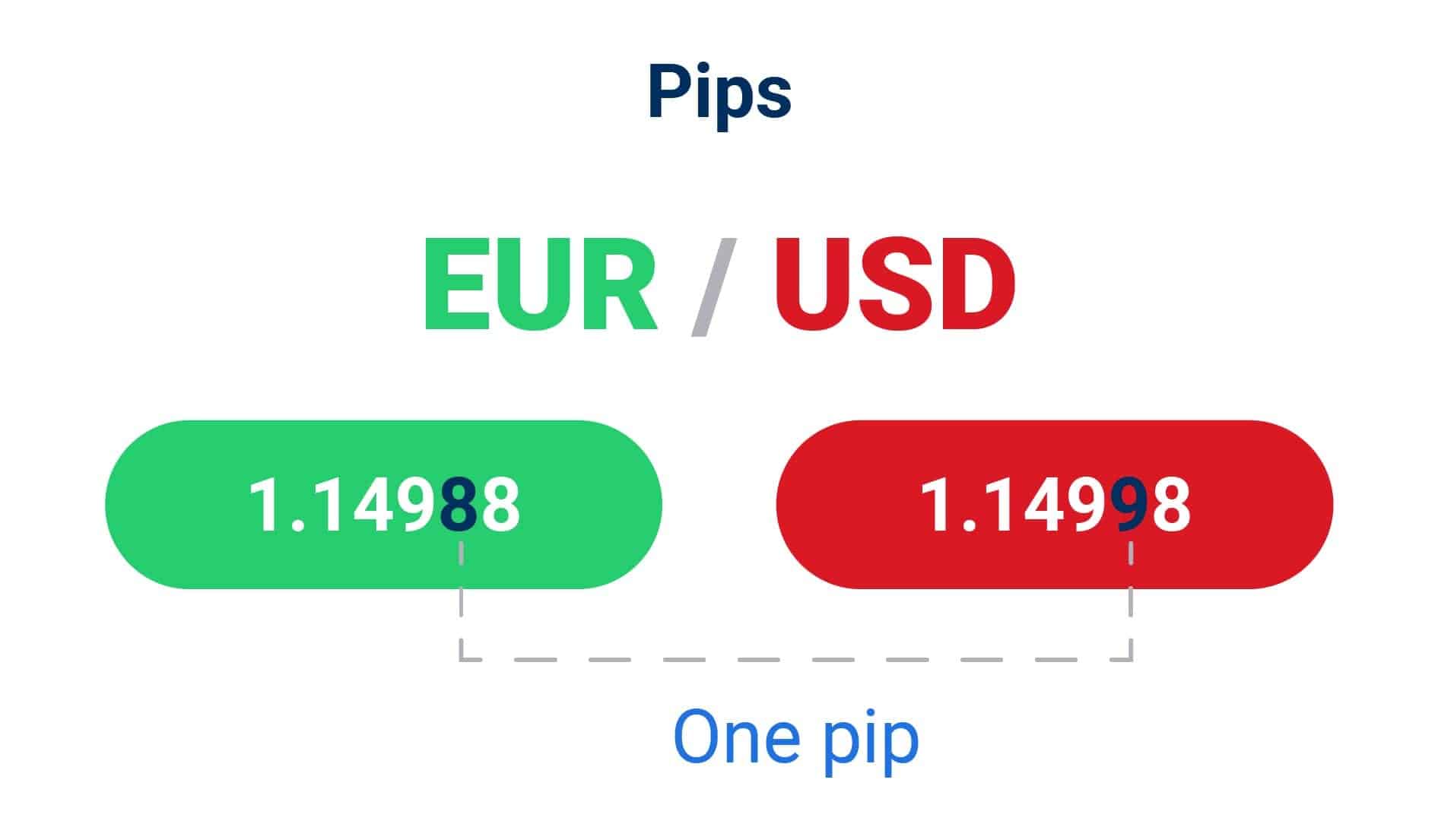
Price changing. Pips and Points explains how traders measure small movements in Forex prices. A pip means “percentage in point” and represents the standard unit for tracking movement in most currency pairs.
For most pairs, one pip appears at the fourth decimal place. For example, if EUR/USD moves from 1.1342 to 1.1343, the price has moved by one pip.
However, Japanese yen pairs work differently. In JPY pairs, traders usually measure one pip at the second decimal place.
For more learning, review our CFD trading guide or read this external guide from Investopedia.
A point represents a fraction of a pip. Many brokers quote currency pairs with one extra digit after the pip to show more precise pricing.
Ten points usually equal one pip. Therefore, a spread of 1.4 pips equals 14 points.
This wording mainly applies to Forex trading. In indices, traders may use terms such as index points or base points instead.
Pip value shows how much money a one-pip movement is worth. The value depends on the currency pair and the size of the position.
Traders calculate profit or loss by multiplying the number of pips moved by the pip value. As a result, position size becomes an important part of risk management.
To estimate pip value in Forex, multiply the pip size by the trade size. Then, adjust the result based on the account currency when needed.
Lot size affects the value of each pip. A larger lot size increases potential profit, but it also increases possible loss.
For most currency pairs, one pip equals 0.0001. A standard lot of 100,000 units usually gives a pip value of 10 units of the quote currency.
For Japanese yen pairs, one pip equals 0.01. Therefore, traders must calculate JPY pairs differently from most other Forex pairs.
A micro lot, mini lot, and standard lot all create different pip values. Because of this, traders should choose lot size carefully before opening a position.

A tick means a single change in price. In Forex, one tick can include one point or several points, depending on how the quote changes.
For example, if EUR/USD moves from 1.10564 to 1.10567, traders may call it one tick, even though the price increased by three points.
In futures and commodities markets, a tick often represents the smallest possible price movement. Therefore, traders use it to calculate profit and loss in those markets.

Pips, points, and ticks help traders describe price movement clearly. In Forex, a pip usually refers to the fourth decimal place, or the second decimal place for JPY pairs.
Points give more precision because they divide a pip into smaller parts. Meanwhile, ticks describe individual price changes.
Price changing. Pips and Points helps traders calculate spreads, movement, profit, loss, and risk before making trading decisions.